Our Vision and Values
Excellence for All:
Every Child Matters. Every Effort Counts.
At Deighton Gates, our vision is simple: ‘Excellence for All’: Every child matters. Every effort counts.
Our vision underpins everything we do. Supported by our CARE values, our curriculum, and our policies, it guides us in promoting the well‑being of the whole child and in creating an environment where pupils grow into independent, confident, global citizens.
- Give our best, so everyone can shine.
- Children at the heart of every decision
- Together, we make our school the best it can be.
At Deighton Gates, our children come first. Our priority is to deliver high‑quality teaching and learning while providing rich, enjoyable experiences that spark curiosity and build character. We know children only get one chance at their primary education; it is our responsibility to ensure every child reaches the highest levels of personal achievement and development. We want every child to be successful, to reach for excellence from their very first day with us and to develop a lifelong love of learning that stays with them long after they leave.
Our Values: At Deighton Gates, we CARE. We are Compassionate, Ambitious, Resilient, and Equal, values that inspire everything we do as a school community. These values help us foster a culture of kindness, curiosity, and high expectations. They provide a shared language that strengthens our sense of purpose and belonging as a whole school community.

Compassion
- Treat others how you want to be treated, with fairness and friendliness.
- Be kind in your words and actions.
- Take care of our school and everything in it.
- Listen carefully to others when they are speaking and valuing what they say, even if your opinion is different.

Ambition
- Inspire others by doing our best and being positive and curious about our learning.
- Be the best that we can be.
- Aim high, don’t give up and believe in ourselves.
- Dream big for our future and put steps in place to make those dreams real.
Resilience
- Stick at something, even when it is tricky and not giving up.
- Learn from our mistakes.
- Bounce back when things don’t go the way they should.
- Push back doubts and fears.
Equality
- Welcome everyone.
- Celebrate our similarities and differences: embracing all that makes us unique.
- Help others join in so everyone safe and valued and making sure no one feels left out.
- Have empathy for those around us : this means understanding how others feel and showing kindness.
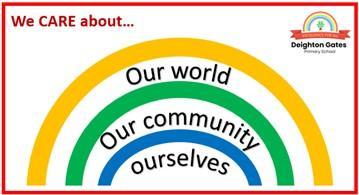
The CARE values are followed by a focus on one of the three layers of CARE:
- Caring for ourselves
- Caring for our communities
- Caring for the world